
When people evaluate a move from California to the Texas Hill Country, the conversation usually centers on Boerne, Fair Oaks Ranch, and the smaller towns that define the rural lifestyle. But one of the most important factors in the decision is what lies 25 to 40 minutes east of those communities: San Antonio.
San Antonio is the seventh-largest city in the United States by population, with a metropolitan area of roughly 2.6 million people. It is not a small town with a downtown. It is a full urban center with major healthcare systems, a professional sports franchise, nationally recognized museums, a culinary scene that has drawn national attention, and a 15-mile River Walk that anchors the city's identity. For California relocators, the question is not whether San Antonio has enough — it is whether you know what is there before you arrive.
This guide covers the cultural institutions, dining, healthcare, recreation, and urban infrastructure that make San Antonio a genuine asset for Hill Country residents. The focus is on what matters for someone making a permanent move, not what tourists visit once.
How Far Is San Antonio from Hill Country Communities?
| Starting Point | To Downtown San Antonio | To the Medical Center | To SA International Airport |
|---|---|---|---|
| Boerne (78006) | 25–35 minutes | 30–40 minutes | 35–45 minutes |
| Fair Oaks Ranch (78015) | 30–40 minutes | 35–45 minutes | 35–45 minutes |
| Helotes | 20–30 minutes | 25–35 minutes | 25–35 minutes |
Drive times are approximate and vary with I-10 traffic. Off-peak travel from Boerne to downtown San Antonio is typically under 30 minutes. During morning and evening rush hours, allow an additional 10 to 15 minutes.
The River Walk and Downtown Core
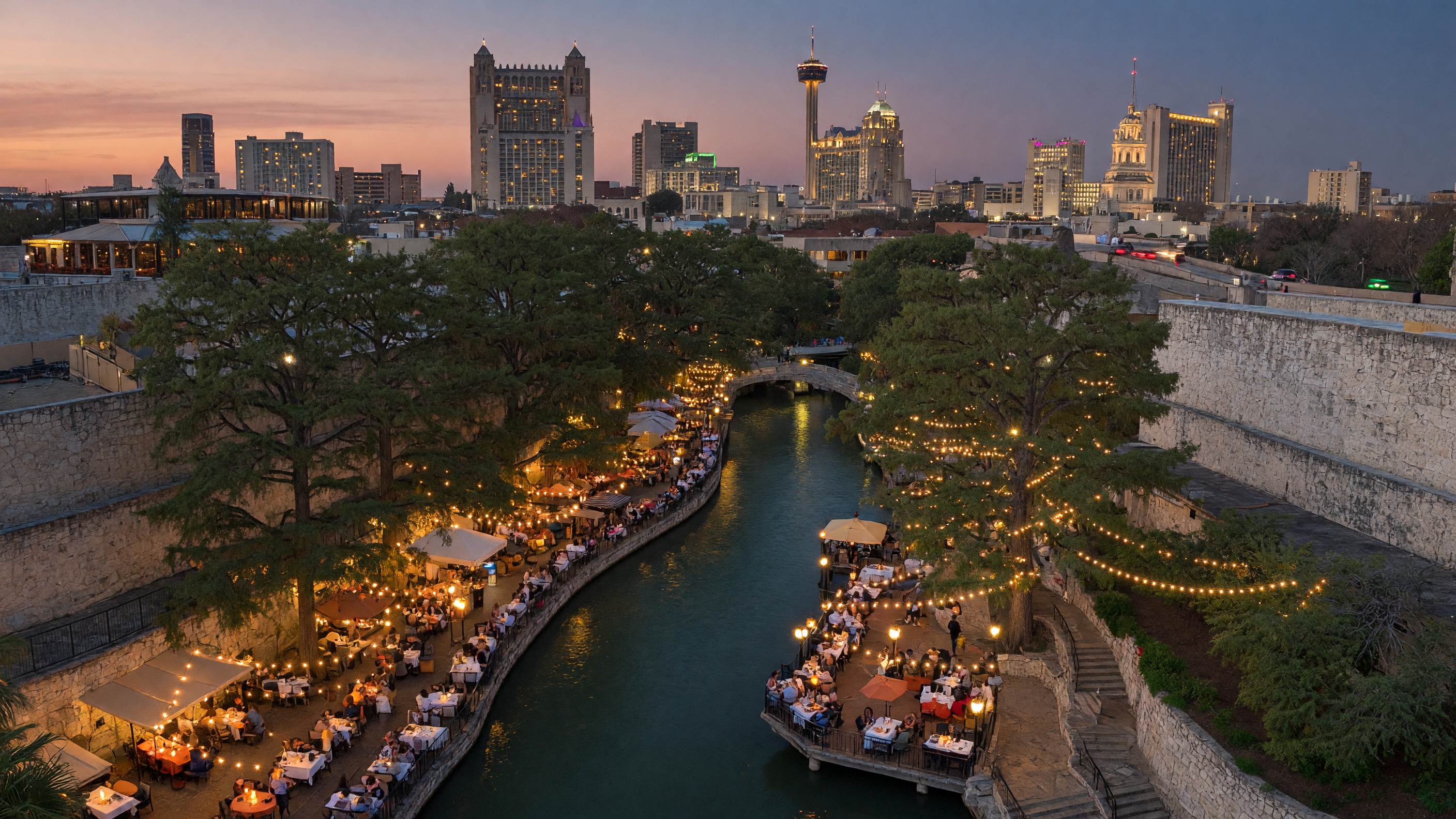
San Antonio's River Walk — or Paseo del Rio — extends approximately 15 miles through the city center, making it the single largest urban waterway attraction in the United States. The original downtown section runs about 3 miles, lined with restaurants, bars, hotels, and public art installations beneath a canopy of mature bald cypress trees.
For residents, the River Walk is not just a tourist corridor. The expanded Museum Reach section, completed in 2009, extends north to the Pearl district and includes public art installations, kayak access, and pedestrian connections to neighborhoods that are genuinely residential. The Mission Reach, extended south to the historic San Antonio Missions (a UNESCO World Heritage Site), adds another 8 miles of walking and cycling paths through restored riparian habitat.
Downtown San Antonio has undergone significant investment in the past decade. The conversion of older office and warehouse buildings into residential lofts and mixed-use developments has expanded the number of people who actually live downtown — not just visit. The Houston Street corridor, Southtown, and the emerging areas along the I-35 corridor each have distinct characters.
For a California transplant accustomed to walking neighborhoods like San Francisco's Hayes Valley, Berkeley's Fourth Street, or Sacramento's Midtown, downtown San Antonio offers a comparable level of walkability, independent retail, and neighborhood identity — at a fraction of the cost.
The Pearl District
The Pearl is the most significant urban redevelopment project in San Antonio's recent history. The 22-acre site was originally home to the Pearl Brewing Company, which operated from 1883 to 2001. The complex has been converted into a mixed-use development anchored by the Hotel Emma (a boutique hotel built within the brewery's original structures), the Culinary Institute of America's San Antonio campus, a year-round farmers market, and a collection of restaurants, shops, and offices.
The Pearl Farmers Market operates every Saturday from 9 a.m. to 1 p.m. and is one of the most well-attended markets in the region. Vendors include local ranchers, produce growers, artisan food producers, and prepared food vendors. The market functions as both a shopping destination and a community gathering point — the kind of place where residents run into neighbors and make it a weekly routine.
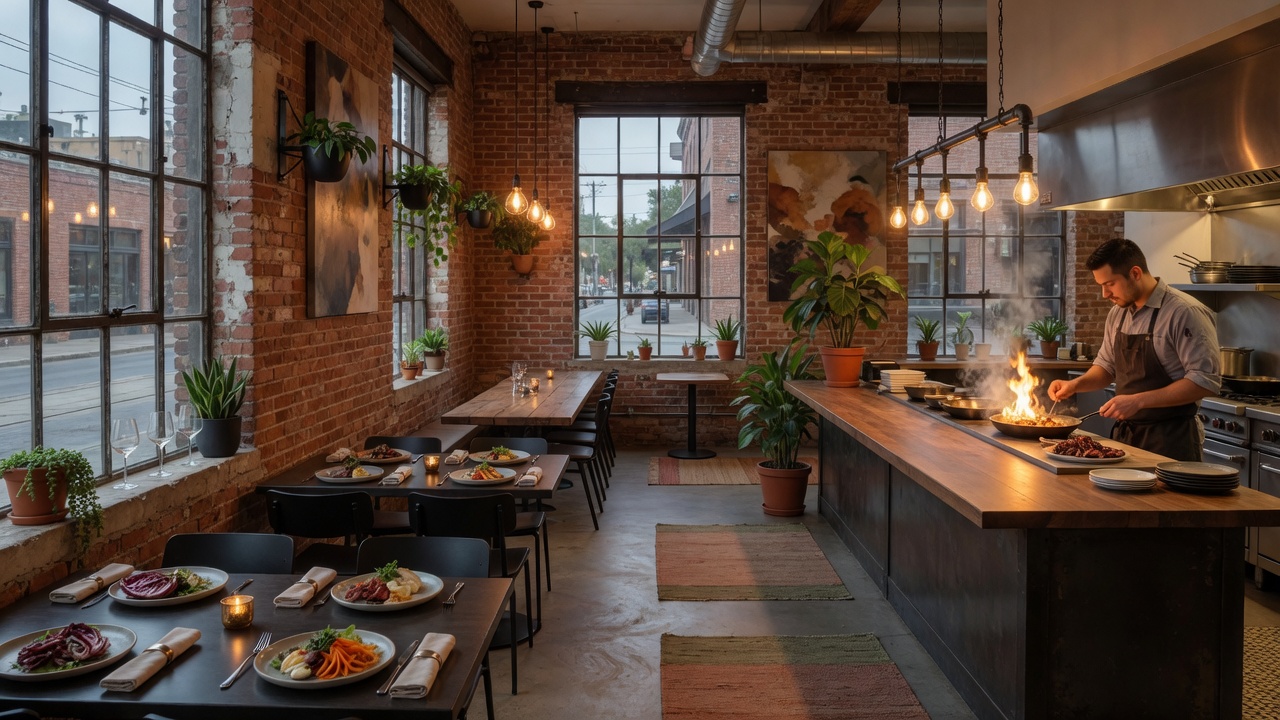
The Pearl's dining options range from casual to high-end. Cured, a charcuterie-focused restaurant from chef Steve McHugh, has been a James Beard Award finalist. Southerleigh Fine Food & Brewery occupies the original brew house. La Gloria serves casual Mexican street food. The range of price points and cuisines makes the Pearl a reliable choice for anything from a quick lunch to a special dinner.
The Pearl is approximately 25 to 35 minutes from Boerne via I-10 East. It functions as the closest thing to a Bay Area-style mixed-use district in the greater San Antonio area.
Address
303 Pearl Parkway, San Antonio, TX 78215
Farmers Market Hours
Saturday, 9 a.m. to 1 p.m. Year-round, rain or shine.
"San Antonio's cultural investment in the past decade has been substantial — billions in redevelopment, new museums, the Culinary Institute of America, and the expansion of the River Walk. For California relocators, this is not a town with a nice downtown. It is a city with genuine institutional depth."
Museums and Cultural Institutions
San Antonio's museum landscape is more developed than most people expect from a Texas city. Several institutions are genuinely noteworthy — not just adequate for a mid-sized metro, but competitive with collections found in California cities.
San Antonio Museum of Art (SAMA)
SAMA houses over 30,000 objects spanning 5,000 years of culture. The Latin American collection is one of the most significant in the United States. The museum occupies the former Lone Star Brewery complex along the Museum Reach of the River Walk — the building itself is worth visiting. General admission: $20 for adults. Free on the first Sunday of each month and every Tuesday evening from 4 to 9 p.m.
McNay Art Museum
The McNay is the first modern art museum in Texas, housed in a 1929 Spanish Colonial Revival mansion. The collection includes post-Impressionist, modern, and contemporary works, with particular depth in European and American painting from the late 19th century forward. The 25-acre grounds include sculpture gardens. General admission: $20 for adults. Free on Thursdays from 4 to 9 p.m.
Witte Museum
The Witte focuses on Texas natural history, science, and South Texas heritage. It sits adjacent to Brackenridge Park and the San Antonio Zoo. The Texas Wild exhibit and the Naylor Family Dinosaur Gallery are highlights. The museum underwent a major expansion in 2017, adding 170,000 square feet of exhibit space. General admission: $16 for adults. The Witte is particularly relevant for families with children.
The DoSeum
The DoSeum is a children's museum with interactive exhibits focused on STEM, arts, and outdoor exploration. The 26,000-square-foot outdoor exhibit space includes a spy academy, bubble spotter, and water play area. Admission: $16 for adults and children. It is one of the better children's museums in the Southwest and a regular destination for families who live in the area.
San Antonio Missions National Historical Park
The San Antonio Missions — including Mission Concepción, Mission San José, Mission San Juan, and Mission Espada — were designated a UNESCO World Heritage Site in 2015. The park preserves the largest concentration of Spanish colonial missions in North America. Admission is free. The Mission Reach trail connects all four missions along the River Walk via an 8-mile cycling and walking path.
Japanese Tea Garden
The Japanese Tea Garden is a 14-acre landscaped garden built in an abandoned quarry on the city's north side. The garden features a 60-foot waterfall, koi ponds, a tea house, and walking paths through Japanese-inspired plantings. Admission is free. The garden is within Brackenridge Park, adjacent to the Witte Museum and the San Antonio Zoo. Open daily, 9 a.m. to sunset.
San Antonio Botanical Garden
The San Antonio Botanical Garden covers 38 acres and includes themed gardens, a conservatory, and a culinary garden. The Lucile Halsell Conservatory, designed by Emilio Ambasz, is a striking series of concrete and glass sunken greenhouses. The garden hosts seasonal exhibitions and educational programs. General admission: $16 for adults. The Botanical Garden is roughly 30 minutes from Boerne via I-10 East.
The Culinary Scene
San Antonio's food scene has gained substantial national recognition. The city has been named a UNESCO Creative City of Gastronomy — one of only a handful in the United States — in recognition of its culinary traditions and innovation. The designation reflects the depth of the city's food culture, not just its Mexican food (which is outstanding and deeply rooted), but the range of cuisines and the quality of independent restaurants operating across the metro.
The core of San Antonio's culinary identity remains its Mexican and Tex-Mex traditions. The West Side is home to some of the most authentic Mexican food in the state — restaurants that have been family-owned for generations and serve dishes rooted in specific regional Mexican cuisines. For California relocators accustomed to the Mexican food in Los Angeles or the Bay Area, San Antonio's Mexican food is different in style — more interior Mexican and Tex-Mex than Baja or coastal — but it is equally deep and arguably more varied.
Notable Restaurants and Dining Areas
The Pearl district is the most concentrated fine-dining area, with restaurants including Cured (James Beard-nominated charcuterie), Southerleigh (brewpub with elevated Southern cuisine), and Mixtli (rotating Mexican tasting menus that have earned national recognition). The Southtown area along South Alamo Street has a growing collection of independent restaurants, bars, and coffee shops. The Medical Center area, accessible from I-10 and Loop 410, has a broad range of affordable, everyday dining.
Barbecue is a significant part of San Antonio's food identity. The city sits between Austin (to the north) and the South Texas ranch country (to the south), and the barbecue scene reflects both influences. Multiple San Antonio barbecue restaurants regularly appear on statewide best-of lists. For context, Texas barbecue is its own culinary tradition — slow-smoked brisket, ribs, and sausage over post oak — and San Antonio is one of the best cities in the state to experience it.
The coffee scene has matured considerably. Rosella Coffee Co. (multiple locations), Mixtli's café, and Merit Coffee have raised the baseline quality above what most people expect from a Texas city. For California relocators accustomed to Blue Bottle or Sightglass, the specialty coffee options in San Antonio are not identical but are genuinely good.
Healthcare Infrastructure
San Antonio's healthcare infrastructure is one of its strongest practical advantages for relocators, particularly retirees and families. The city has two major medical school campuses, multiple nationally ranked hospitals, and one of the largest military medical complexes in the country.
The South Texas Medical Center, located northwest of downtown along Wurzbach Road, is a 900-acre medical campus housing 45 healthcare institutions, including University Health (the county hospital system with Level I trauma center), UT Health San Antonio (the medical school), and Methodist Hospital (one of the largest hospitals in the nation by bed count). The Medical Center is roughly 30 to 40 minutes from Boerne via I-10 and Loop 410.
Baptist Health System operates multiple hospitals across the metro, including Baptist Medical Center on the downtown east side. The CHRISTUS Santa Rosa system operates several facilities, including a children's hospital. For California relocators accustomed to major academic medical centers like UCSF, Cedars-Sinai, or Stanford, San Antonio's healthcare options cover the full range of specialties — primary care, oncology, cardiology, orthopedics, and pediatric subspecialties — without requiring a drive to another city.
The Veterans Administration also maintains a significant presence, with the Audie Murphy Memorial Veterans Hospital on the south side and the new outpatient clinics across the region. Active-duty military families are well-served by BAMC (Brooke Army Medical Center) at Fort Sam Houston, one of the largest military medical training facilities in the world.
"Healthcare access is one of the most underrated factors in the California-to-Texas decision. San Antonio has more hospital beds, more specialists, and more medical infrastructure per capita than most Hill Country relocators expect. You do not lose access to quality healthcare by moving here — you gain proximity to a medical center that serves a region of millions."
Sports, Entertainment, and Events
San Antonio is home to one professional sports franchise and a growing collection of minor league and semi-professional teams. The San Antonio Spurs (NBA) play at Frost Bank Center downtown and are the city's primary professional sports draw. The franchise has a strong local following and a history of competitive success — five NBA championships between 1999 and 2014. Tickets for regular-season games range from approximately $25 to $300+ depending on opponent and seat location.
San Antonio FC plays in the USL Championship (second-division professional soccer) at Toyota Field. The team draws consistent local support and provides a more affordable match-day experience than the NBA. The San Antonio Brahmas play in the UFL at the Alamodome, which also hosts major concerts, conventions, and the annual NAICM auto show.
The city's annual event calendar includes Fiesta San Antonio, a 10-day festival held each April that draws over 2.5 million attendees with parades, concerts, and cultural events across the city. The San Antonio Stock Show & Rodeo, held each February at the AT&T Center, is one of the top 10 rodeos in the nation by attendance. The holiday season includes the Ford Holiday River Parade and the River Walk's holiday lighting ceremony, which draw significant local participation.
Urban Parks and Green Spaces
San Antonio has invested heavily in urban green space. Beyond the River Walk's walking and cycling corridors, the city maintains a system of linear parks and greenbelts that connect neighborhoods and provide daily outdoor access.
Brackenridge Park, on the near north side, covers 343 acres and includes the San Antonio Zoo, the Witte Museum, the Japanese Tea Garden, and the Sunken Garden Theater. The park's trail system connects to the Museum Reach of the River Walk and provides a green corridor through one of the city's oldest neighborhoods.
Phil Hardberger Park, covered in detail in our outdoor recreation guide, is the city's largest urban park at over 330 acres, with the Salado Land Bridge connecting its east and west halves. Friedrich Wilderness Park, also covered in the parks guide, offers over 10 miles of rugged trails in 600-plus acres on the northwest side.
McAllister Park covers 507 acres on the north side and includes an extensive trail network, disc golf course, dog park, and athletic fields. Hardberger Park and McAllister Park are both within 25 to 35 minutes of Boerne via I-10 and Blanco Road.
What California Relocators Typically Undervalue
The most common mistake I see from California relocators is treating the Hill Country as a self-contained decision — evaluating Boerne and Fair Oaks Ranch without accounting for San Antonio as an integrated part of the lifestyle. This leads people to over-index on rural charm and under-index on practical infrastructure.
Here is what the data and experience show California buyers undervalue:
Specialty healthcare access
California relocators often come from areas with multiple competing healthcare systems. They assume Texas will be thinner. In most specialties, San Antonio's medical infrastructure is competitive with mid-to-large California metros. The South Texas Medical Center has more hospital beds per capita than many California cities of similar or larger size. For oncology, cardiology, and orthopedic specialties in particular, the depth of available providers is significant.
Independent dining and food culture
The assumption that Texas food is limited to barbecue and Tex-Mex is outdated. San Antonio's independent restaurant scene spans Vietnamese (a significant Vietnamese community on the south and east sides), German-influenced cooking (a legacy of the Hill Country's 19th-century immigration), contemporary Mexican, Southern, and increasingly international cuisines. The food is different from California, not lesser.
Museum and cultural depth
San Antonio's museum infrastructure — SAMA, the McNay, the Witte, the Missions — provides genuine cultural access. These are not small-town art galleries. They are mid-to-large institutions with significant collections, rotating exhibitions, and educational programming. For families with school-age children, the Witte and DoSeum alone provide a year's worth of educational field trips.
Cost of cultural participation
San Antonio's museums offer free or reduced-admission evenings that are not promotional gimmicks — they are sustained institutional programs. SAMA is free Tuesday evenings. The McNay is free Thursday evenings. The Witte has multiple free-admission days. Many San Antonio cultural institutions receive city funding through the Hotel Occupancy Tax, which subsidizes public access in a way that most California cultural institutions do not. The result is that cultural participation is more affordable here than in virtually any major California city.
San Antonio as Part of the Hill Country Equation
The Hill Country lifestyle is defined by smaller-town living — the walkable downtowns of Boerne and Fredericksburg, the open spaces of Fair Oaks Ranch, the quiet of rural acreage. But San Antonio is the urban backbone that makes that lifestyle work for people accustomed to having cultural, medical, and dining infrastructure nearby.
A 30-minute drive from Boerne puts you at the Pearl for a Saturday farmers market and lunch. A 35-minute drive puts you at the McNay for an evening of art. A 40-minute drive puts you at the Medical Center for a specialist appointment. That proximity — rural living with genuine urban access — is one of the defining advantages of the Hill Country, and it is one that California relocators tend to appreciate more after they arrive than before they move.
For a comparison of the different Hill Country communities and how they relate to San Antonio, see the city comparison guide. For a detailed breakdown of housing costs, taxes, and overall cost of living, review the cost of living comparison.
Written by
Bill Ross
Hill Country Homesteads Group, brokered by KW Boerne
Bill Ross is a Texas real estate agent with nearly four decades in high-tech sales and a network of 1,000+ California real estate agents for coordinated cross-state transactions. Recognized in USA Today and The Washington Post for his relocation expertise.
Related Guides
Boerne vs Fair Oaks Ranch vs San Antonio
Compare Hill Country communities for families, retirees, and remote workers.
San Antonio Airport Access for California Relocators
Airlines, flight times, parking costs, and how often you will actually fly.
The Hill Country Dining Scene
Restaurants, cafes, and dining in Boerne, Fredericksburg, Comfort, and beyond.
Cost of Living Comparison
California vs Texas — housing, taxes, insurance, utilities, and daily expenses.
Sources
- San Antonio metropolitan area population (approximately 2.6 million) — U.S. Census Bureau, Metropolitan and Micropolitan Statistical Area Population Estimates, 2024.
- San Antonio as seventh-largest U.S. city by population — U.S. Census Bureau, City Population Estimates, 2024.
- San Antonio Museum of Art — collection size, Latin American holdings, admission pricing — San Antonio Museum of Art. samuseum.org
- McNay Art Museum — collection, admission, free Thursday evenings — McNay Art Museum. mcnayart.org
- Witte Museum — expansion, Texas Wild exhibit, admission — Witte Museum. wittemuseum.org
- San Antonio Missions UNESCO World Heritage Site designation (2015) — UNESCO World Heritage Centre. whc.unesco.org
- UNESCO Creative City of Gastronomy designation — UNESCO Creative Cities Network. en.unesco.org
- South Texas Medical Center — 45 healthcare institutions, 900-acre campus — South Texas Medical Center. stmchealth.org
- San Antonio Spurs — NBA franchise, championship history — NBA.com, San Antonio Spurs history.
- Fiesta San Antonio — 2.5 million attendees, 10-day festival — Fiesta San Antonio. fiestasanantonio.org
- Phil Hardberger Park — Salado Land Bridge, acreage — City of San Antonio Parks and Recreation. sanantonio.gov
Last reviewed: June 2026. Sources verified for accuracy.