
How Texas and California Education Systems Compare
If you are moving from California, understanding how Texas structures its education system is essential — because it works differently in several fundamental ways. The differences are not good or bad, but they are real, and they affect how you evaluate schools, how your tax dollars fund them, and what your child's daily experience will look like.
Accountability: A–F Letter Grades vs. the California School Dashboard
Texas uses the TEA A–F accountability system, which assigns every school and district a single letter grade from A to F. The rating is based on a 100-point weighted calculation across three domains: Student Achievement, School Progress, and Closing the Gaps. The system is designed to be simple, comparative, and publicly legible — a parent can see at a glance that Boerne ISD is an "A" and understand what that means relative to other districts.
California uses the California School Dashboard, a multi-dimensional indicator-based model that displays performance across multiple measures — English language arts, math, chronic absenteeism, graduation rates, English learner progress, and suspension rates — represented by color-coded status levels (blue, green, yellow, orange, red). There is no single letter grade. The system is more nuanced but harder to interpret quickly, and direct comparisons between districts are less straightforward.
What this means for you: Texas gives you a clear, comparable number for every school. California's system is more informative for diagnosing specific strengths and weaknesses, but it does not lend itself to the kind of "this school is better than that school" shorthand that the A–F system encourages. Both systems have critics. Neither tells the whole story.
Funding: Property Taxes vs. State Income Tax
This is the single most important structural difference for relocating families. Texas has no state income tax. Schools are funded primarily through local property taxes, collected under two rate codes:
- M&O (Maintenance and Operations) — covers day-to-day operations: teacher salaries, supplies, utilities. Most districts set this at or near the state cap of $0.67 per $100 of assessed value (after the 2024 rate compression under HB 2).
- I&S (Interest & Sinking) — covers voter-approved bond debt for facilities and capital projects. Varies by district based on bond obligations.
The state supplements local revenue through the Foundation School Program, which provides a guaranteed level of per-pupil funding. Property-wealthy districts that exceed this threshold may send some revenue to the state through the recapture system (commonly called "Robin Hood"), which redistributes funds to lower-wealth districts.
California funds schools through a mix of state income tax revenue and local property taxes, using the Local Control Funding Formula (LCFF), which allocates additional funding based on student demographics — more money for low-income students, English learners, and foster youth.
"In Texas, the property tax rate in your district directly correlates to school funding. Choosing a home in a high-value district like Boerne is choosing a well-funded school system — your property taxes are your school investment."
Class Sizes
California law caps K–3 class sizes at 24 students for schools participating in the class-size reduction program, but actual averages in many suburban districts run 22–26 students per classroom. In grades 4–12, classes of 28–35 are common.
Texas does not have a statewide class-size cap for grades 4–12. However, Hill Country districts maintain student-teacher ratios of 13:1 to 17:1 at the district level — significantly lower than many California suburban districts. Boerne ISD's 16:1 ratio means most classrooms run well under 25 students, and individual attention from teachers is a practical reality, not just a brochure claim.
Curriculum Standards: TEKS vs. California Content Standards
Texas uses the Texas Essential Knowledge and Skills (TEKS) as its state curriculum framework. California uses the California Common Core State Standards and California Content Standards. In practice, the core academic content — math, science, reading — is similar in both states. The differences are more visible in specific areas:
- History and social studies: Texas TEKS include specific requirements for Texas history and the study of founding documents. California's history framework emphasizes different perspectives and has adopted more recent legislation on ethnic studies.
- Science: Both states teach evolution. Texas has historically had more political debate over science curriculum, but current TEKS are aligned with mainstream scientific consensus.
- Elective breadth: Larger Texas districts (like Northside ISD) often offer more career and technical education (CTE) pathways than comparable California districts, due to the state's investment in workforce development.
What Stays the Same
The core experience of attending a well-run public school in Texas is not dramatically different from attending one in California. Children go to class, do homework, participate in sports and activities, take standardized tests, and graduate. The cultural and community context differs — Texas schools tend to have more visible school spirit, more community involvement in school events, and a more centralized role of schools in small-town social life — but the educational fundamentals are recognizable.
Why Property Tax Rates Matter for School Choice
For California families accustomed to Proposition 13's assessment caps, the connection between property taxes and school quality in Texas requires a mental adjustment. In California, your property tax rate is relatively stable and does not directly determine your school's quality — state income tax revenue smooths out differences between wealthy and poor districts. In Texas, the link is more direct.
Here is how it works in practice:
- Higher property values in a district = more local tax revenue per student. A home valued at $500,000 in Boerne ISD generates significantly more local school funding than the same home in a lower-value district.
- Voter-approved bonds allow districts to build modern facilities. Boerne ISD has passed bond elections to build new campuses as enrollment grows, funded by the I&S portion of property taxes. Understanding how school district taxes interact with MUDs and special taxing districts is essential for accurate budgeting — these layers can add significantly to your total tax bill.
- The Foundation School Program provides a baseline, but districts above that baseline retain the advantage. This is why Boerne ISD can maintain a 16:1 student-teacher ratio and offer programs that smaller-tax-base districts cannot.
For families choosing where to buy a home, this creates a direct connection: the neighborhood you choose determines the school your child attends, and the tax base of that neighborhood shapes the resources available to that school. In Kendall County (where Boerne is located), the effective property tax rate is approximately $1.70–$1.85 per $100 of assessed value. In Bexar County, rates vary by district but generally range from $2.00 to $2.60 per $100. These rates are significantly higher than California's base rates, but they come with no state income tax — the total tax burden is the comparison that matters.
Bill can help you compare the total tax implications for specific properties you are considering. The difference between two homes can mean different schools, different tax bills, and different community experiences — and understanding that trade-off is part of making a good relocation decision.
Boerne ISD — The Primary Hill Country District
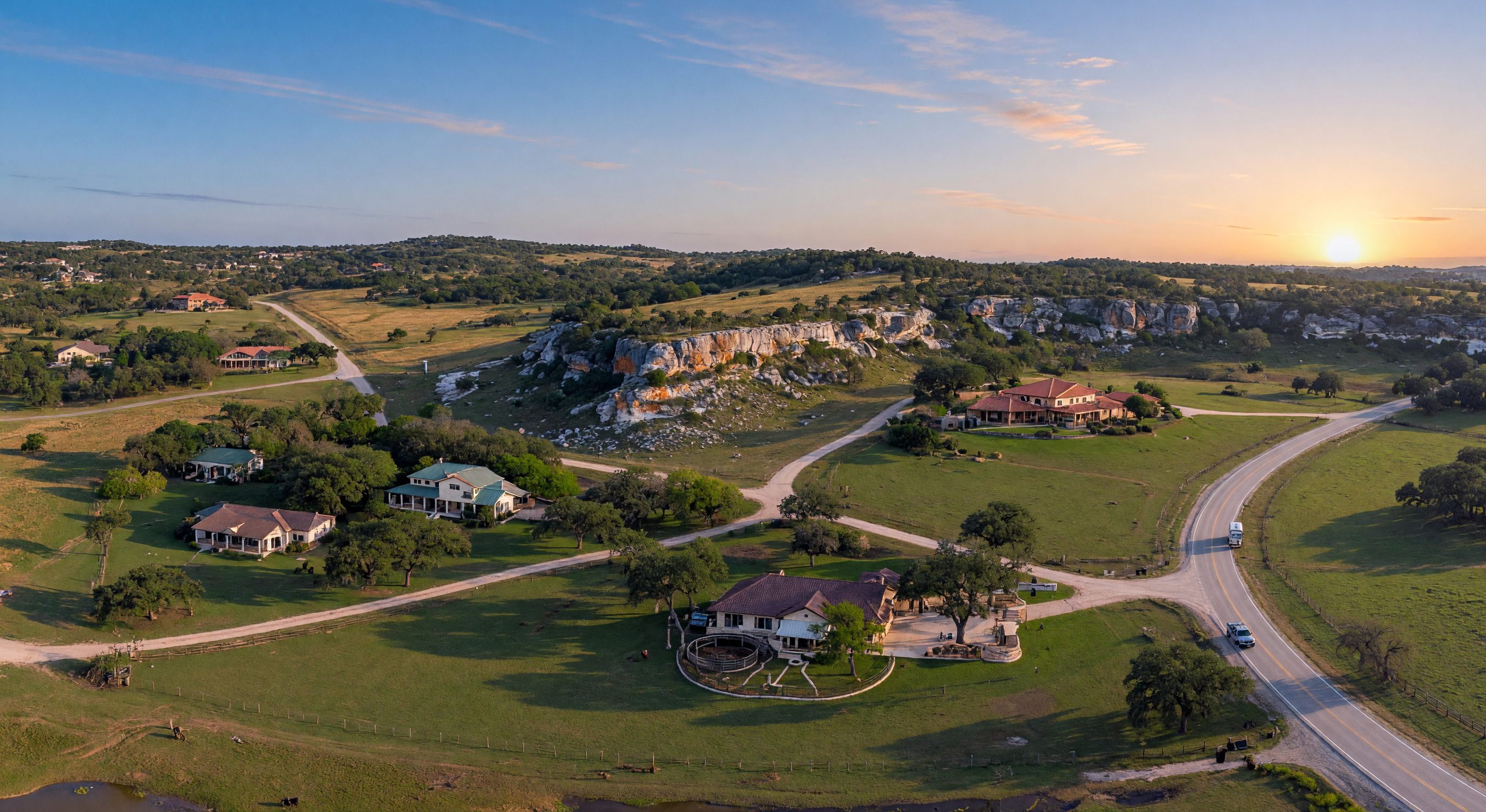
Boerne ISD is the district that most relocating families to Boerne and Fair Oaks Ranch will be looking at. With roughly 11,000 students across 12 campuses, it has earned an A-rating from the Texas Education Agency for six consecutive years through 2025 — a track record that puts it in the top tier of Texas school districts. The district's 98.3% graduation rate and 16:1 student-teacher ratio reflect the kind of personal, community-oriented education that draws families to the Hill Country in the first place.
Key Boerne ISD Schools
| Campus | Level | Notes |
|---|---|---|
| Boerne High School | 9–12 | The original campus, strong athletics and fine arts, central Boerne location |
| Champion High School | 9–12 | Serves the growing western portion of the district, modern facilities |
| Voss Middle School | 6–8 | Feeds into Boerne High, consistent performance |
| Cibolo Creek Middle School | 6–8 | Feeds into Champion High, growing enrollment |
What Makes Boerne ISD Different
- Small class sizes: A student-teacher ratio of approximately 16:1 means your child is more likely to be known by name. Compare this to many California suburban districts where 25:1 is common.
- Health Science P-TECH Academy: A Pathways in Technology Early College High School allowing students to earn an associate degree in health sciences alongside their high school diploma — a direct-to-career pathway with no tuition cost.
- Strong AP participation: Robust Advanced Placement curriculum with high participation and pass rates, placing graduates at Texas A&M, UT Austin, and out-of-state universities.
- Fine arts and athletics: Competitive programs in both, with the kind of participation rates that come from a district small enough that students are not lost in the crowd.
- Community involvement: Boerne ISD benefits from a highly engaged parent community. Booster clubs, volunteer programs, and school events are well-attended — a reflection of the town's character.
Growth and the Future
Boerne and Fair Oaks Ranch are growing, and the district is planning for it. New campuses are in development as populations increase. The district has maintained its A-rating even as enrollment has grown, which suggests institutional quality rather than a temporary peak. For families thinking five or ten years ahead, Boerne ISD's track record of managing growth without sacrificing quality is a meaningful signal.
"Boerne ISD has earned an 'A' rating from the Texas Education Agency for six consecutive years (2020–2025), with a 98.3% graduation rate and a student-teacher ratio of approximately 16:1."
— Texas Education Agency, School District Rating Reports
Northside ISD — When You Want a Larger District
Northside ISD is the largest school district in the San Antonio area and one of the four largest in Texas, serving the northwest and western portions of Bexar County. With over 100 campuses and approximately 100,000 students, it operates on a completely different scale from Boerne ISD. For some families, that scale is exactly what they want.
Programs and Strengths
- NSITE High School: San Antonio's premier business and technology magnet school, focusing on cybersecurity, entrepreneurship, and STEM fields. Admission is competitive.
- Magnet schools and STEM academies: Multiple specialized campuses for gifted students, fine arts conservatories, and career-focused programs that a smaller district simply cannot support.
- Career and Technical Education (CTE): Extensive CTE pathways across healthcare, engineering, information technology, and skilled trades.
- Scale and choice: With 120+ campuses, families have genuine options within the district. Specific schools perform at A and B levels even while the district average is a C.
The Trade-Offs
The district's C-rating reflects the challenge of serving a very large, economically diverse student population. Individual campus ratings vary significantly — some Northside schools outperform many Boerne ISD campuses, while others struggle. A family moving into Northside ISD should research the specific school their address feeds into rather than relying on the district average.
Larger class sizes, more bureaucratic enrollment processes, and less individualized attention are the practical trade-offs. For families who value Hill Country living with access to urban-level school resources — particularly specialized programs that smaller districts cannot offer — Northside ISD is worth serious consideration.
Comal ISD — The New Braunfels Corridor
Comal ISD serves New Braunfels, Garden Ridge, and parts of eastern Kendall and Comal Counties along the I-35 corridor between San Antonio and Austin. With approximately 30,000 students across roughly 30 campuses, it holds a B-rating from the TEA and is one of the fastest-growing districts in the region.
Strengths
- Newer facilities: Rapid growth has meant new campus construction and modern facility upgrades that keep pace with enrollment.
- Strong community support: New Braunfels has a growing, engaged community that invests in its schools.
- Competitive athletics and fine arts: The district fields competitive UIL programs across multiple sports and has expanding fine arts offerings.
- Location advantage: Comal ISD communities offer proximity to both San Antonio and Austin, with Hill Country scenery and a growing commercial corridor.
What to Consider
Some areas served by Comal ISD are farther from Boerne and Fair Oaks Ranch, so commute matters. If you are choosing to live in Boerne but considering Comal ISD for your children, factor in the daily drive. Additionally, as one of the fastest-growing districts, capacity and boundary changes are possible — worth monitoring if you are buying a home with long-term school plans in mind.
Comfort ISD — The Small-Town Option
Comfort ISD is the smallest district in this guide, serving approximately 1,090 students across four campuses in the town of Comfort — about 10 miles northwest of Boerne along Interstate 10. The district holds a C-rating from the TEA, but its 13:1 student-teacher ratio is the lowest of any district in this comparison, and that number tells a significant part of the story.
What Comfort ISD Offers
- Extremely small class sizes: With 1,090 students total, your child will be known by every teacher and administrator. For families coming from California schools of 1,500–3,000 students, this is a fundamentally different experience.
- Community integration: In Comfort, the school is the social center of the town. Parents, grandparents, and community members are woven into school life in a way that larger districts cannot replicate.
- Competitive UIL programs: Despite its small size, Comfort ISD fields competitive teams in UIL academics and athletics. Small districts often have higher participation rates because there are fewer students competing for spots.
- Agricultural and CTE programs: Reflecting the town's rural character, the district offers agricultural education and hands-on career and technical programs.
The Trade-Offs
Fewer program options, less facility infrastructure, and limited AP course offerings compared to Boerne ISD or larger districts. Comfort ISD does not have the breadth of electives, extracurricular programs, or specialized academic tracks that a district of 11,000 can provide. For some families, the intimacy is worth the trade-off. For others, the limited scope becomes a constraint as children get older.
Good fit for: Families who prioritize a tight-knit community, rural Hill Country living, and a school where every child matters — particularly those with younger children or those who plan to supplement with homeschool, online, or extracurricular programs outside the district.
Bandera ISD — The Rural Option
Bandera ISD serves the farther reaches of the Hill Country, centered on the town of Bandera — the self-proclaimed "Cowboy Capital of the World." With approximately 3,500 students and a student-teacher ratio of roughly 15:1, it is a small district with strong community bonds and a distinctly rural character.
Good fit for: Families who prioritize a rural lifestyle, wide-open spaces, and a close-knit school community over the breadth of programs and facilities that larger districts offer.
Trade-offs: Fewer extracurricular options, more limited facilities, and fewer AP or specialized academic programs compared to Boerne ISD or Northside ISD. Bandera is approximately 30 miles west of Boerne, so the commute to either Boerne or San Antonio is a factor for families who work or access services in those areas.
Charter Schools in the San Antonio and Hill Country Area
Texas has a well-established charter school system, and the San Antonio metro area — which includes the Hill Country fringe — offers several high-quality tuition-free options. Charter schools are publicly funded, independently operated, and open to any Texas resident. They cannot charge tuition, and admission is typically by lottery when demand exceeds capacity.
Notable Charter Schools Serving the Region
- BASIS Texas Charter Schools: Consistently ranked among the top public schools in Texas and nationally. The Shavano Park and Medical Center campuses serve the northwest San Antonio area accessible from Boerne. BASIS is known for rigorous academics, a STEM-heavy curriculum, and high AP participation. Admission is by lottery; waitlists are common.
- Great Hearts Texas: A network of classical preparatory schools with campuses in San Antonio. Great Hearts emphasizes a liberal arts curriculum, Socratic discussion, and a structured academic culture. Multiple campuses serve the metro area.
- IDEA Public Schools: A large charter network focused on college preparation, with numerous San Antonio campuses. IDEA's model emphasizes extended school days, data-driven instruction, and a 100% college acceptance goal.
- School of Science & Technology (SST): STEM-focused charter schools with multiple San Antonio locations, offering project-based learning and technology integration.
- Young Women's Leadership Academy: An all-girls public college preparatory school in San Antonio focused on leadership, STEM, and service learning.
What to Know About Charter School Enrollment
Most charter schools with strong reputations maintain waitlists, particularly for mid-year enrollment. If you are considering a charter school as part of your relocation, apply as early as possible — ideally before your move date. Some families use their assigned public school for the first semester while waiting for a charter spot to open.
Charter schools do not provide transportation, so factor in the commute from your chosen neighborhood. A BASIS or Great Hearts campus 25 minutes from your home means a daily drive that may not be sustainable long-term.
Private Schools in the Hill Country
The Hill Country offers several private school choices for families who want alternatives to the public system. These schools vary in philosophy, size, and cost, but they share a common advantage: the ability to offer a more tailored educational experience than a large public system.
- Geneva School of Boerne: A classical, Christian K-12 school emphasizing the liberal arts, Socratic discussion, and a structured curriculum rooted in the Western intellectual tradition. Located in Boerne. Well-regarded among families seeking a classical education model.
- Crestmont Christian Preparatory School: A K-11 Christian school in the Boerne area with a focus on college preparation and faith-based education.
- Hill Country Montessori School: A Montessori program serving PK-8, offering an alternative pedagogical approach in a Hill Country setting. For families who want self-directed, hands-on learning in a smaller environment.
- St. Peter the Apostle Catholic School: A Catholic school serving the Boerne community with a faith-centered curriculum.
- The Goddard School: A national early childhood and elementary franchise with a campus in nearby New Braunfels, offering structured developmental programs for younger children.
Homeschooling and Virtual School Options
Texas has one of the most supportive legal environments for homeschooling in the country. This matters for relocating families who may want flexibility during the transition, or who prefer homeschooling as a long-term choice.
Texas Homeschooling Law
Texas law recognizes homeschooling as a valid form of education under the "reasonable curriculum" standard. Homeschooled students are not required to take standardized tests, follow the state TEKS curriculum, or register with the state. The five subjects typically taught are reading, spelling, grammar, mathematics, and good citizenship. Parents have broad freedom in how they structure instruction.
Texas also allows homeschooled students to participate in public school extracurricular activities and, in some districts, to take individual courses — a practice called "dual enrollment" that many Hill Country families use to combine homeschool instruction with access to specific public school programs like athletics, band, or CTE courses.
Hill Country Homeschool Community
The Hill Country has active homeschool co-ops and support networks that provide group classes, social activities, science labs, field trips, and shared resources. These co-ops are a significant part of why homeschooling works well in this region — families do not have to do it alone.
Virtual and Online Options
Texas offers several tuition-free virtual school programs, including courses through the Texas Virtual School Network (TxVSN) and full-time virtual campuses operated by established districts. These can be a practical fit for students who need flexible scheduling, thrive in non-traditional settings, or are in transition during a cross-state move. Some families use virtual programs for the first semester while getting settled, then transition to in-person instruction.
Special Programs: STEM, UIL Athletics, and Fine Arts
Texas places a distinctive emphasis on three areas that California families should understand: STEM pathways, UIL competition, and fine arts programs. These are not just extracurriculars in Texas — they are part of the district identity and a significant factor in how families choose schools.
STEM and Career Pathways
- Boerne ISD Health Science P-TECH: Students earn a high school diploma and an associate degree simultaneously, with a direct pathway into healthcare careers. No tuition.
- Northside ISD NSITE: Specialized magnet school for cybersecurity, business, and technology — competitive admission, industry partnerships.
- Northside ISD CTE: Over 30 career and technical education pathways across healthcare, engineering, IT, welding, automotive technology, and skilled trades.
- Comal ISD STEM programs: Growing CTE and STEM offerings aligned with the corridor's economic development.
UIL Athletics and Academics
The University Interscholastic League (UIL) is the governing body for academic, athletic, and fine arts competitions in Texas public schools. UIL is deeply embedded in Texas school culture — it is the framework through which schools compete in football, basketball, track, debate, science, theater, band, and dozens of other activities.
For relocating families, UIL matters because it determines which athletic classification your child's school competes in (based on enrollment), which affects competition level, travel distance, and scheduling. Boerne ISD competes at the 5A level; Comfort ISD and Bandera ISD compete at smaller classifications (2A–3A), which means less travel for games but also smaller programs with less depth.
Fine Arts
Texas districts invest significantly in fine arts programs, and competition inUIL fine arts (band, choir, theater, visual arts) is taken as seriously as athletics. Boerne ISD and Comal ISD both maintain competitive band, theater, and visual arts programs. Northside ISD operates dedicated fine arts magnet campuses. For families where arts education is a priority, the breadth of options in the Hill Country region is strong.
What Makes Hill Country Schools Attractive
Beyond the individual district profiles, there are characteristics shared across Hill Country schools that make them particularly appealing for families relocating from California's larger, more urban districts.
- Smaller class sizes as a norm: Student-teacher ratios of 13:1 (Comfort ISD) to 17:1 (Comal ISD) are standard across the region. In many California suburban districts, 25:1 to 30:1 is the reality. This is not a minor difference — it shapes the daily classroom experience.
- Community involvement that is genuine: In towns like Boerne, Comfort, and Bandera, schools are social institutions as much as educational ones. Parent participation in school events, volunteer programs, and governance is consistently high. For families coming from anonymous suburban sprawl, this is often the most noticeable positive change.
- Strong property tax base funding: Because Texas schools are funded locally, the Hill Country's rising property values have translated into well-resourced campuses. Boerne ISD has passed multiple bond elections to build new facilities without sacrificing academic quality.
- A range of school types within reach: Within a 30-mile radius of Boerne, families can access public districts rated A through C, tuition-free charter schools ranked among the best in Texas, classical Christian schools, Montessori programs, Catholic schools, and active homeschool co-ops. That kind of educational diversity is unusual for a semi-rural area.
- Schools as part of community life: Friday night football, UIL competitions, school festivals, and community events create a social fabric that extends well beyond the classroom. For families seeking a place where their children's school is also their family's community hub, the Hill Country delivers.
How to Choose the Right District for Your Family
Choosing a school district is one of the most consequential decisions in your relocation. Here is a practical framework for making it well.
- Start with your child, not the district. What does your child need most? Small class sizes? Advanced academics? Strong athletics? Special education services? A particular extracurricular? Start with their specific needs and work outward.
- Verify attendance zones before you buy. In Texas, school assignment is tied to your home address. Use the district's online boundary map to confirm which campus your address feeds into — not just the district, but the specific school. A single street can straddle two different attendance zones.
- Visit the schools. No amount of online research replaces walking the halls, meeting administrators, and seeing classrooms in session. Most Texas districts welcome campus tours — schedule them before you commit to a neighborhood.
- Talk to parents in the community. Bill can connect you with families in your target neighborhoods who have children in local schools. Their firsthand experience is more valuable than any rating.
- Think long-term. Where do you want your child to go to high school, not just elementary? In smaller districts like Boerne ISD, the feeder pattern matters — your elementary school choice determines your middle and high school path.
- Consider special education and support services. If your child has an IEP or needs specialized support, research what each district offers. Texas uses its own evaluation and service framework, which may differ from California's.
- Factor in the commute. A great school 45 minutes away is a daily burden. Be realistic about how far you are willing to drive, especially in Hill Country traffic during school hours.
- Understand the tax trade-off. Higher property values mean better-funded schools — but also a higher tax bill. Compare the total cost of a home (price + annual property taxes) in different districts to understand what you are actually paying for school quality. If you are a first-time buyer, Texas first-time buyer programs can help offset closing costs.
Texas School Enrollment Checklist
Once you have selected a district and a home, here is what you need to enroll your child in a Texas public school. Start gathering these documents before your move — some items (like immunization updates) may take time.