
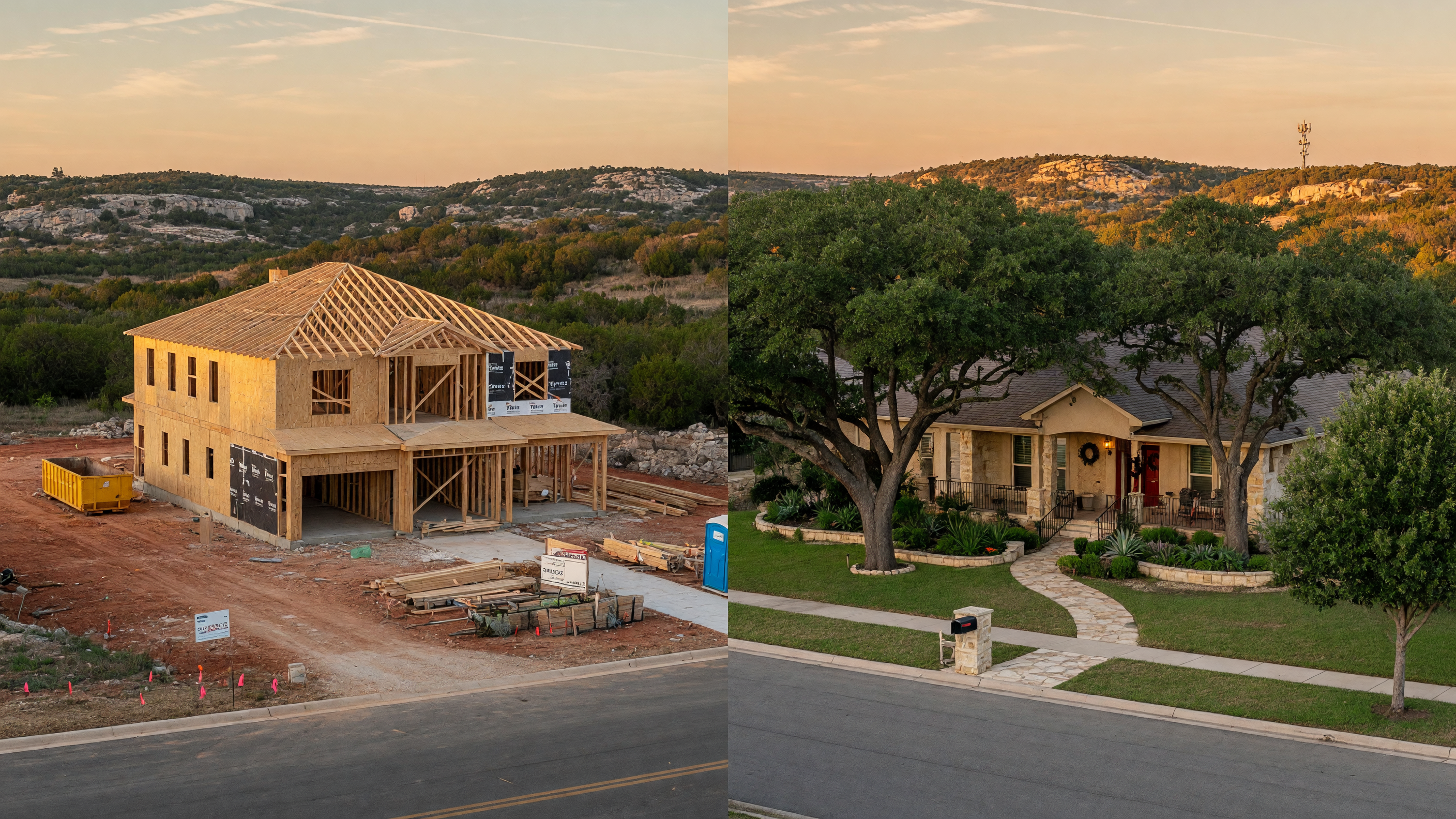
The Hill Country corridor north of San Antonio is one of the most active new-construction markets in the state [4]. Drive through zip codes 78006 (Boerne) and 78015 (Fair Oaks Ranch and Bulverde) and you will pass active building sites alongside neighborhoods where homes have settled in for fifteen or twenty years. For buyers, that creates a genuine choice — not a theoretical one. For sellers, it means understanding exactly what you are competing against when a buyer can walk into a model home with a rate buydown and a design center appointment.
This is not a recommendation for or against new construction. Both options carry real advantages and real tradeoffs. What follows is an analytical breakdown of the landscape, the financial dynamics, and the community-by-community context that buyers and sellers need to make informed decisions in this specific market.
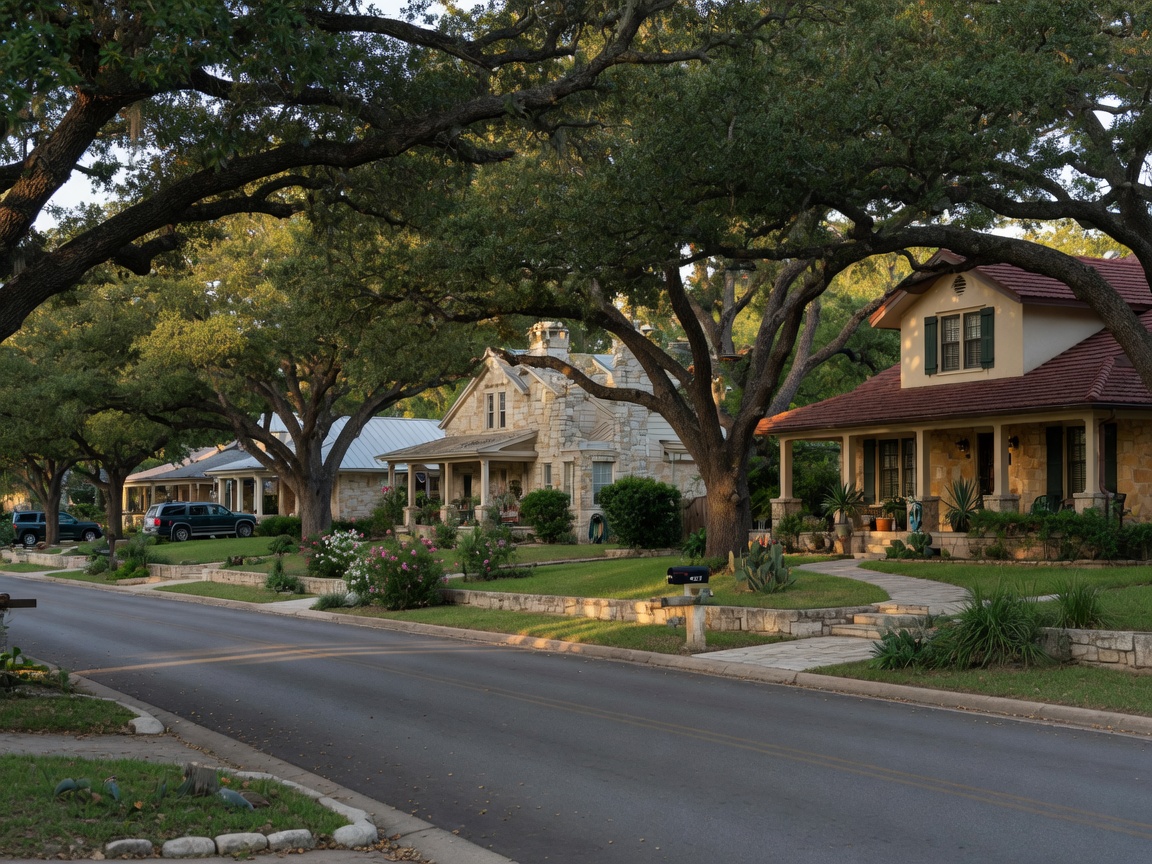
The New Construction Landscape in 78006 and 78015
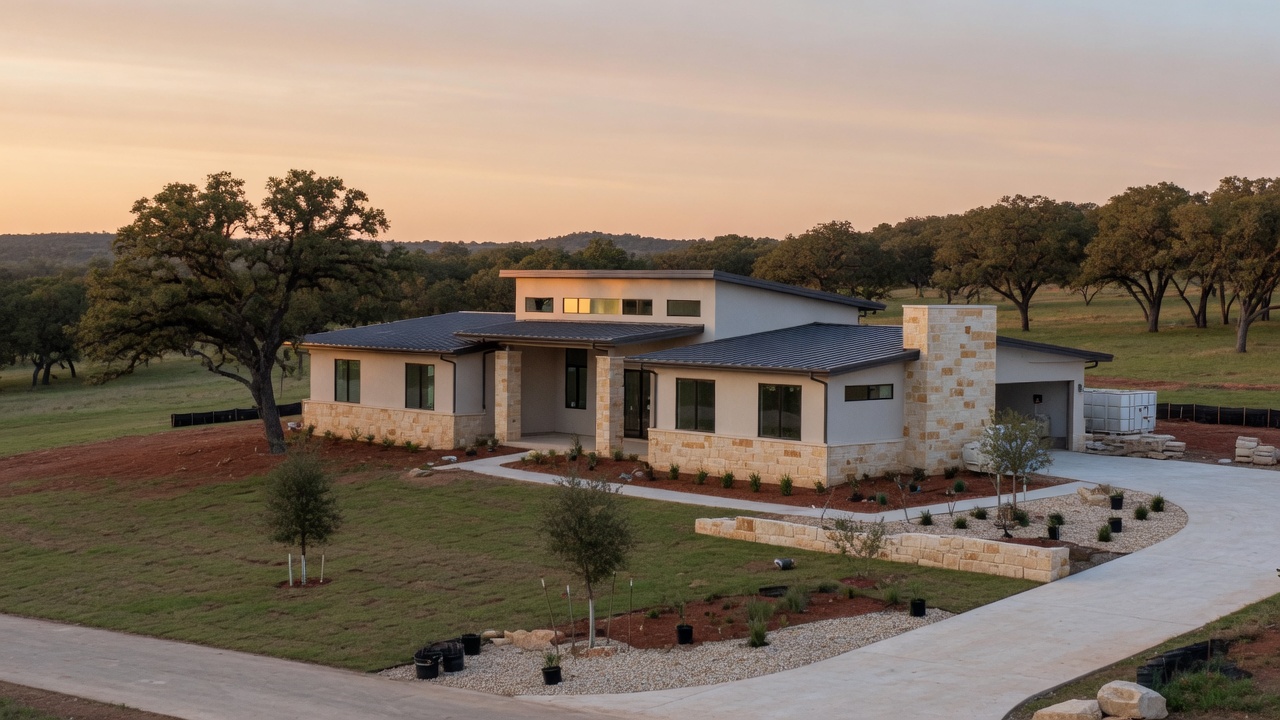
Both zip codes have seen sustained builder activity over the past several years [1][2]. Multiple national and regional builders are active in each, offering product types that range from entry-level paired or smaller-lot homes to custom and semi-custom estate properties on acre-plus lots. The Hill Country corridor attracts builders because demand remains consistent — driven by population growth in Kendall and Comal counties [1][2], continued in-migration from higher-cost states [5], and a school district network (primarily Boerne ISD) that draws families specifically [14].
New construction in this corridor tends to cluster in master-planned communities [4]. These developments come with homeowners association structures, amenity packages — typically including community pools, trails, and parks — and uniform architectural design standards. For buyers, that predictability has value. For sellers in adjacent or competing neighborhoods, those communities represent a defined competitive set.
The density and scale vary. Some communities in 78006 and 78015 are large-scale master plans with multiple phases, clubhouses, and commercial-adjacent amenities. Others are smaller enclaves of forty to eighty lots with a park and a trail. The price points span significantly — from the high $200,000s in more compact product types to well above $1 million in custom estate communities [4][5]. Understanding which segment of new construction you are evaluating matters more than the broad label of "new build."
New Construction — What Buyers Should Evaluate

Builder Incentives: How They Actually Work
Nearly every active builder in this corridor offers some form of buyer incentive [6]. The most common are rate buydowns (where the builder pays to reduce your mortgage rate for the first two to three years), closing cost credits, and upgrade packages at the design center. According to the National Association of Home Builders (NAHB), 64% of builders nationwide offered sales incentives in 2025 — a five-year high driven by persistent affordability challenges [6]. These incentives are marketing tools. They are structured to make the monthly payment look attractive at the point of sale, and they work — a rate buydown that brings your effective rate from 7% to 5.5% in the first year creates a meaningful reduction in your monthly housing cost during that period.
But incentives affect the total cost of ownership differently than a straight reduction in purchase price. A rate buydown is temporary. Once the buydown period expires, the rate resets to the note rate — and your payment increases [7]. Closing cost credits reduce your out-of-pocket at closing but do not lower the appraised value against which your property taxes will be assessed [10]. Upgrade packages increase the perceived value of the home but rarely return their full cost at resale [16]. Understanding this distinction is important: incentives change the timing and presentation of cost, not necessarily the total amount you pay.

The Base Price Is Not the Final Price
Builder pricing in the Hill Country corridor typically starts with a base price that reflects a standard floor plan on a standard lot, with builder-grade finishes [4]. The base price is what gets advertised. The price you actually pay — the total contract price — depends on your lot selection (premium lots with views, larger acreage, or cul-de-sac positions carry premiums), structural options (additional bedrooms, extended garages, outdoor living areas), and design center selections (flooring, countertops, cabinetry, fixtures, appliance packages).
The design center dynamic is worth understanding clearly. Builders typically include a set allowance for design center selections in the base price. Upgrading beyond that allowance adds to the contract price. For some buyers, the total upgrade cost represents 10% to 20% or more above the base price [16] — a range that varies significantly by builder and product tier. The design center visit is often an emotional experience, and builders understand that. Going in with a predetermined budget for upgrades — and sticking to it — changes the financial outcome substantially.
Construction Quality Varies Between Builders
Not all builders build to the same standard. This is not a generalization — it is a structural reality of the production home market [15]. National volume builders operate on margin structures that require consistent material choices and construction methods. Regional and smaller builders may offer more flexibility and, in some cases, higher-specification construction, but at different price points. Within the national builder segment, quality standards vary between product lines: a builder's entry-level line and their premium line may be built by different subcontractor teams with different materials.
For buyers, the practical approach is to visit completed homes (not just model homes), attend open houses in communities that are one to two years old, and observe the condition of common areas, model consistency, and homeowner satisfaction. Independent home inspections during the option period are standard practice and strongly recommended, even on new construction. Builders object to this less often than buyers assume.
Timeline Risk
New construction timelines are estimates, not guarantees. Supply chain disruptions, weather delays, labor shortages, and permitting backlogs can push closing dates by weeks or months [15]. In the Hill Country, weather-related delays — particularly during spring thunderstorm season — are not uncommon. Builders typically include contingency language in contracts that allows for extended timelines without triggering buyer remedies. If you are coordinating a cross-state move with a California home sale, a delayed new-construction closing can create significant logistical and financial pressure. Understanding the builder's track record on timeline adherence — and building in schedule buffer — is essential.
Warranty and Post-Close Support
Most production builders offer a one-year workmanship warranty, a two-year systems warranty (covering mechanical and electrical systems), and a six-year structural warranty [8][9]. This "1-2-6" structure aligns with the warranty framework recognized under the Texas Residential Construction Liability Act (RCLA), found in Chapter 27 of the Texas Property Code [8]. Builders may offer extended or enhanced coverage beyond these minimums, and the quality and responsiveness of warranty service varies widely [9]. A builder's willingness and ability to address punch-list items and warranty claims after closing is one of the most important — and least discussed — factors in evaluating a builder. Talking to homeowners who closed one to two years ago in the same community provides more useful information than any marketing material.
The Hidden Cost of "New"
New construction communities come with characteristics that affect livability during the initial years. Landscaping is immature — there is no shade canopy, no established garden, and in many cases, the lot is surrounded by active construction sites [18]. Construction traffic, dust, and noise are ongoing until the community's final phase is complete. In larger master plans, that timeline can span five to ten years. Future phases may alter the neighborhood's character — a community that feels open and rural in phase one can feel significantly different when adjacent phases are built out with different product types or higher density. Buyers should review the master plan, understand how many phases remain, and evaluate what the community will look like at buildout, not just at purchase.
New Construction — What Sellers Are Competing Against
If you are selling a resale home in 78006 or 78015, you are not competing only against other resale listings [5]. You are competing against builders who are offering financial incentives that directly change the buyer's monthly payment calculation.
How Builder Financing Changes the Buyer's Math
Consider the practical example: a builder offers a 2-1 rate buydown on a $525,000 home — year one at 4.5%, year two at 5.5%, then the note rate of 6.5% from year three onward [7]. In year one, the buyer's monthly principal and interest payment is materially lower than what a resale buyer would pay at the prevailing market rate for the same home price. Even though the rate buydown expires, it creates an initial monthly payment advantage that a resale seller cannot match directly — unless the seller offers a price reduction or a temporary buydown through their own closing cost contribution.
Builders also offer closing cost credits that can cover lender fees, title insurance, and prepaid items — reducing the cash a buyer needs to bring to closing [6]. For a buyer comparing two options at similar price points, the lower cash-to-close requirement on new construction can be the deciding factor, even if the long-term cost of ownership is comparable or slightly higher.
Why Buyers Choose Builders Over Comparable Resale
Beyond financing, several factors tilt buyer preference toward new construction at similar price points. The perception of "new" carries weight — no deferred maintenance, no unknown history, everything is under warranty [8]. The design center process lets buyers personalize finishes, which creates emotional ownership before closing. And builders market an aspirational lifestyle through model homes, community amenities, and curated neighborhood events. For first-time buyers or relocators unfamiliar with the local resale inventory, the builder's sales operation is often more visible and accessible than the resale market [15].
What Resale Sellers Can and Cannot Control
A resale seller cannot replicate a builder's rate buydown or closing cost incentive package. But resale sellers control factors that builders cannot match: established landscaping, mature trees, a known and proven neighborhood, often larger lots in older subdivisions, and the ability to negotiate on price, repairs, and closing timeline in ways that production builders cannot or will not.
Competitive positioning starts with understanding the builder's inventory and pricing in your immediate area [5]. If a builder is offering completed spec homes (inventory homes) at aggressive pricing in your zip code, that establishes a price ceiling for resale in the same general area. If the builder's pricing is higher, your resale home may benefit from a value comparison. If the builder's pricing is lower — particularly on entry-level product — resale sellers in a similar price band need to understand the competitive pressure and price accordingly.
Staging, presentation, and marketing quality matter more when buyers have a visible alternative. A well-presented resale home that emphasizes the advantages of an established property — mature trees, completed landscaping, proven drainage, known HOA costs — can compete effectively against new construction. But it requires intentional effort and honest market positioning.
Resale in 78006 and 78015 — Where Resale Holds Its Own
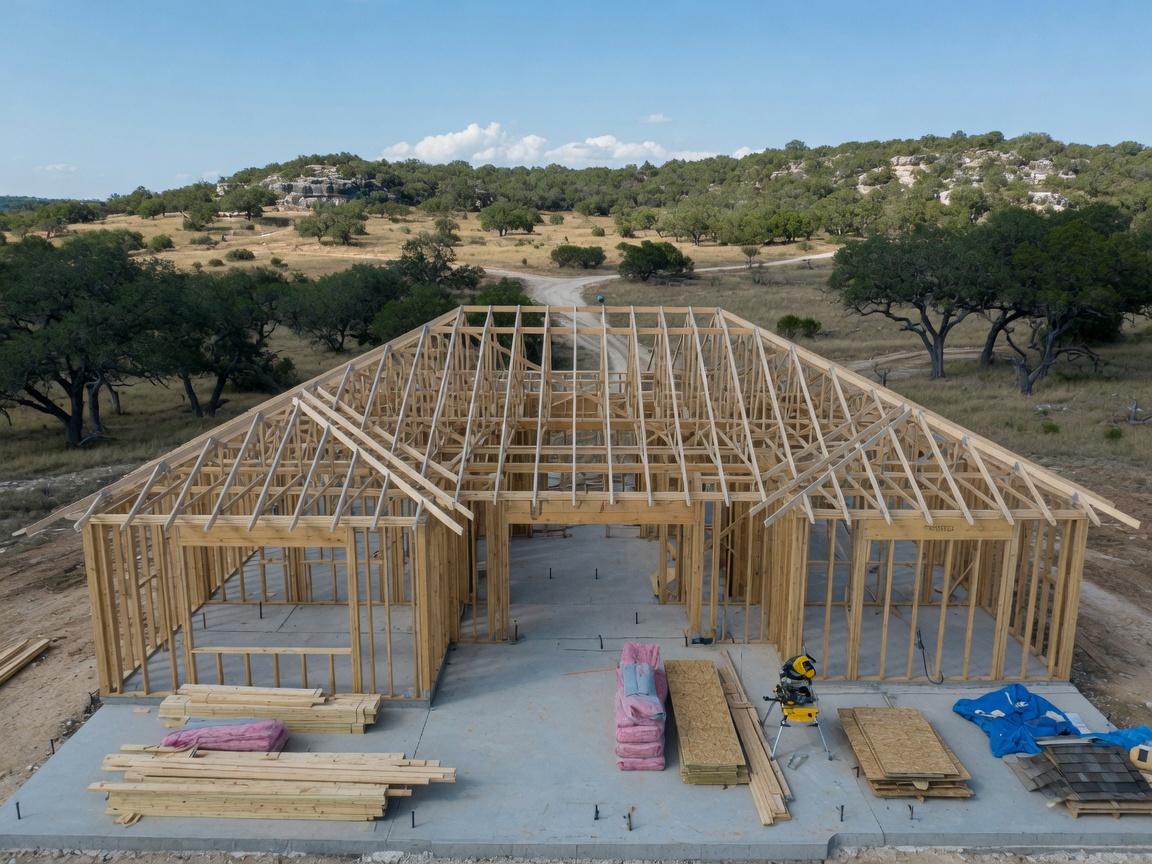
New construction does not dominate every segment of the market. In established neighborhoods with mature trees, proven construction, and settled communities, resale homes compete on different terms — and often win.
Established Neighborhoods and What They Offer
Communities like Bentwood, The Ranches at Creekside, Menger Springs, and Tapatio Springs in 78006, or the Fair Oaks Ranch Country Club area and The Fairways in 78015, have advantages that new construction cannot replicate quickly. The trees are twenty or thirty years old. The drainage systems have been tested through multiple Texas storm cycles. The HOA structure, including dues and rules, is established and transparent — buyers know exactly what they are getting [15]. The neighborhood character is defined, not projected.
These communities also tend to offer larger lots than what most current production builders are delivering in their standard product lines [4]. In the Hill Country corridor, lot sizes in older established neighborhoods frequently range from a quarter acre to well over an acre, particularly in communities along the western and northern edges of 78006. Many current new-construction communities are building on somewhat smaller standard lots, with premiums for larger or view lots.
Price Per Square Foot: New vs. Resale
Price per square foot comparisons between new construction and resale in the Hill Country corridor vary significantly by community, home condition, and lot characteristics [4][17]. In general, new construction in master-planned communities tends to command a premium on a per-square-foot basis relative to resale in older neighborhoods — reflecting the cost of builder overhead, incentives, and the "new" premium. However, resale homes in well-maintained, desirable locations with significant lot size or views can compete at similar or higher per-square-foot values. The comparison is not uniform across the market, and buyers should evaluate specific properties rather than relying on broad averages.
What Resale Offers That New Construction Cannot
Resale homes in established Hill Country communities offer several structural advantages: a known HOA with established dues (no surprise assessments during buildout), mature landscaping that provides shade, privacy, and aesthetic value, proven construction performance through Texas weather cycles, and a neighborhood identity that is already defined [15]. For buyers who prioritize these characteristics — and many relocators do — resale is not a compromise. It is a preference for a different set of tradeoffs.
Community-by-Community Breakdown
The following is a categorized overview of active new-construction communities, established resale communities, and mixed communities across zip codes 78006 and 78015 [4]. This is not intended as individual community profiles — it is a framework for understanding what characterizes each group and how they fit into the buyer-seller comparison.
Active New Construction Communities
78006 — Boerne
Esperanza, Regency at Esperanza, Corley Farms, George's Ranch, Caliza Reserve, Windsong, Miralomas, The Summit at Miralomas, Fox Falls, Regent Park, Ammann Ranch Estates, Bergenplatz Ranches, Boerne Hollow, Bridlewood, Cibolo Crossing, Coveney Ranch, Deep Hollow, Diamond Ridge, Estancia at Thunder Valley, Fallbrook, Hidden Oaks, Irons and Grahams, Jackson Woods, Kendall Pointe, La Cancion, Limestone Ranch, Napa Oaks, Platten Creek, Ridge Creek, Sablechase, Sage Oaks, Silver Hills, Stonehaven Terraces, Sundance Ranch, Trails of Herff Ranch, Waterstone, and Woods of Frederick Creek.
This is a broad group, and the communities within it vary significantly [4]. Some — like Esperanza and Corley Farms — are large-scale master-planned developments with extensive amenity packages, community pools, trail systems, and multiple product tiers from national builders. Others — like Bergenplatz Ranches, Deep Hollow, and Estancia at Thunder Valley — are smaller-lot or estate-oriented communities with fewer amenities but more individual character. Price points range from the mid-$300,000s for entry-level product to well above $1 million for custom estate lots [17]. Lot sizes vary from standard residential lots in the more compact communities to multi-acre estate parcels. The common thread is active builder inventory and new-home pricing that sets a competitive baseline for resale homes in the area.
78015 — Fair Oaks Ranch / Bulverde
Elkhorn Ridge, Post Oak Subdivision, Lemon Creek Ranch, Ponderosa, Calvert area, Threshold Ranch, Stanley Estates, The Arbors, Blackjack Estates, Blackjack Oaks, Chartwell, Cibolo Trails, Country Club Place, Deer Meadow, Deer Meadow Estates, Front Gate, Oakwood Heights, Terra Bella, The Enclave, and Trailside.
New construction in 78015 is somewhat more concentrated than in 78006, with several communities clustered along the FM 737 corridor and the Bulverde area. Product types range from national-builder production homes on standard lots to smaller custom and semi-custom communities with higher price points. Communities like Elkhorn Ridge and Cibolo Trails offer family-oriented master-planned environments with schools, parks, and community centers, while others like Threshold Ranch and Stanley Estates target buyers looking for larger lots and more rural character [2]. Price ranges overlap with 78006 but tend to skew slightly lower in the entry-level segments, with comparable pricing in the mid-range and luxury tiers [5].
Established Resale Communities
78006 — Boerne
Bentwood, Shoreline Park, The Ranches at Creekside, Menger Springs, The Vistas, Balcones Creek, Balcones Creek Estates, Balcones Creek Ranch, Cibolo Oaks, Cibolo Ridge Estates, Dove Country Farms, Highlands Ranch, Indian Hills, Lake Country, Lakeside Acres, Leon Creek Estates, Lost Creek Ranch, Oak Bend Estates, Pecan Springs, Pleasant Valley, Presidio of Lost Creek, River Mountain Ranch, Saddlehorn, Southern Oaks, Stonegate, Sunrise Addition, Tapatio Springs, The Bluffs of Lost Creek, The Crossing, Village Green, Village Oaks, Windwood Estates, Woodland Ranch Estates, Woods of Boerne, Woodside Village, Scenic Oaks, and Country Bend.
These communities represent the established residential fabric of the Boerne area. Many were developed between the early 1990s and the 2010s, and they reflect the construction standards, lot sizes, and neighborhood planning of their respective eras [4]. Price points range from the high $300,000s for smaller homes in more modest subdivisions to well above $1 million in communities like Menger Springs, Balcones Creek Ranch, and River Mountain Ranch [17]. Lot sizes are generally larger than what current production builders are offering in standard product lines — a half-acre to several acres is common in many of these neighborhoods. Mature trees, established landscaping, and proven drainage are consistent features. The HOA structures in most of these communities have been operating for years or decades, providing buyers with transparent and predictable dues and rules [15]. For buyers prioritizing established character and larger lots, this group represents the strongest resale inventory in the corridor.
78015 — Fair Oaks Ranch / Bulverde
Fair Oaks Ranch core and Country Club area, The Fairways, The Falls, The Fountains, The Village, The Woods of Fair Oaks, Windermere Estates, River Valley, Raintree Woods, and Setterfeld Estates.
The established resale communities in 78015 are anchored by the Fair Oaks Ranch Country Club area and its associated neighborhoods. These communities — particularly The Fairways, The Falls, and The Fountains — offer a golf-and-country-club lifestyle with mature landscaping, established infrastructure, and a defined community identity [15]. Price points tend to cluster in the mid-$400,000s to above $800,000, with estate properties exceeding that range. Lot sizes vary but tend to be generous by production-builder standards. The Village and The Woods of Fair Oaks offer somewhat more compact homesites in a settled, walkable environment. Windermere Estates and Setterfeld Estates provide a more rural, acreage-oriented feel within the Fair Oaks Ranch address. This group competes effectively against new construction for buyers who value community maturity, mature trees, and known HOA costs over the latest finishes and builder incentives.
Mixed — Both New Construction and Resale
78015
Stone Creek Ranch is the primary example of a community where luxury new construction and established resale homes coexist within the same development. This creates a unique market dynamic: buyers can compare new-build pricing directly against resale within the same neighborhood, with shared amenities, school assignments, and community standards [5]. For resale sellers in Stone Creek Ranch, the presence of active new construction means the competitive context is immediate and visible. For buyers, it provides a rare opportunity to evaluate both options side by side — including price per square foot, lot characteristics, and the tradeoffs between new finishes and established landscaping.
Practical Decision Framework
The choice between new construction and resale is not a judgment call about quality or value. It is a prioritization exercise. The questions below are designed to help both buyers and sellers clarify what matters most in their specific situation.
For Buyers
- Are you prioritizing a move-in-ready home with current finishes, or an established property with mature trees and proven neighborhood character?
- How sensitive are you to timeline risk? Can you accommodate a potentially delayed closing, or do you need a defined move-in date?
- Do you understand the total cost of the new construction option — including lot premiums, upgrades, and the post-buydown payment — not just the base price?
- How important is warranty coverage versus established construction performance? Both have value, but they address different risks.
- Are you comfortable living in a community that is still under construction — with active building sites, construction traffic, and future phases ahead?
- Have you evaluated the builder's track product and warranty service, or are you relying primarily on the model home and sales presentation?
For Sellers
- Do you know what builders are currently offering — both in pricing and incentives — in your immediate area?
- Is your pricing competitive with the effective cost of a new-construction home at the same price point, after factoring in builder incentives?
- Are you emphasizing the advantages that resale offers — mature landscaping, established HOA, larger lots, proven drainage — in your marketing?
- Have you considered offering your own buyer incentives (closing cost contributions, rate buydowns, or repair credits) to narrow the gap?
- Is your home's condition, staging, and presentation competitive with a model home experience — or does it need attention before listing?
- Are you aware of the builder's inventory homes (spec homes) that are completed and actively competing for the same buyer pool?
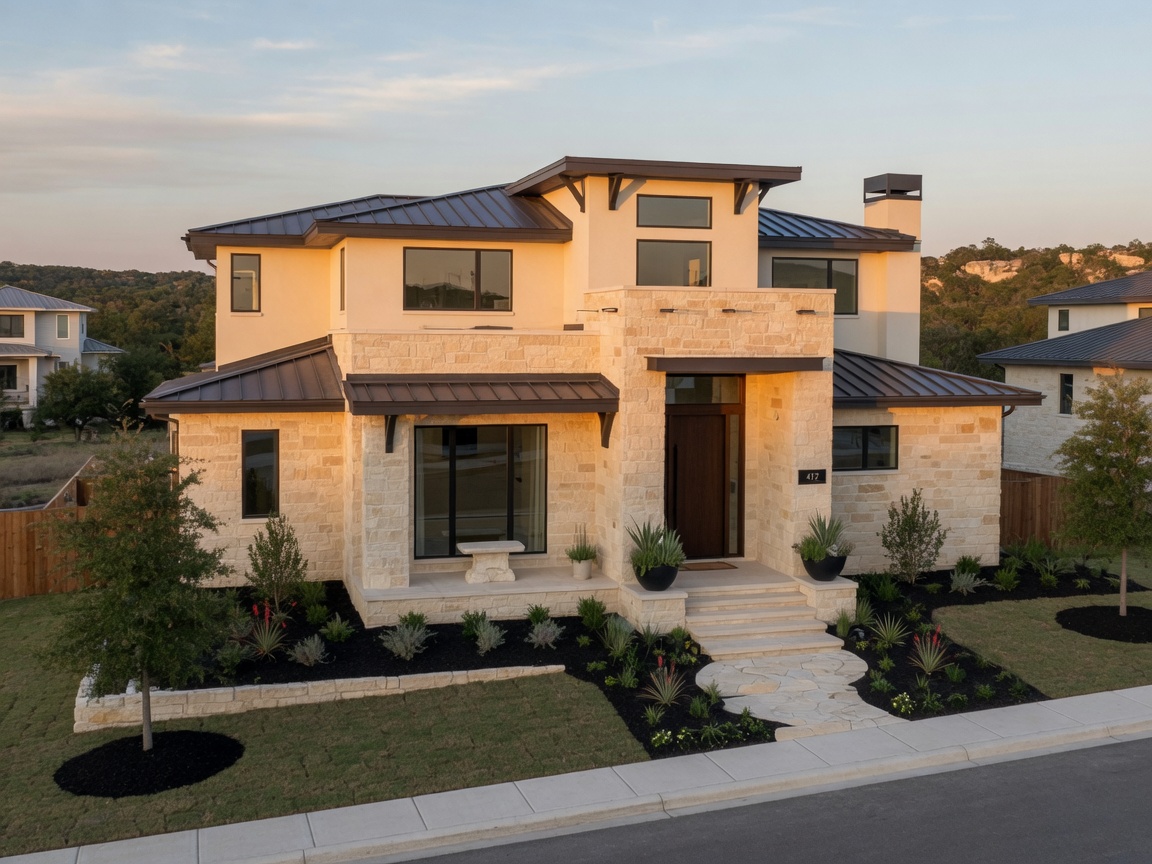
Frequently Asked Questions
Can I negotiate the price with a builder like I can with a resale seller?
Negotiation with builders works differently than with individual sellers [4]. Production builders typically do not reduce the listed base price, because doing so affects comparable sales data for future phases and other buyers in the community. Instead, builders negotiate through incentives: upgraded design center packages, closing cost credits, lot premiums waived, or rate buydowns [6]. The effective discount is real, but it is structured as added value rather than a price cut. With resale sellers, you negotiate on price directly, and the agreed-upon price becomes the comps baseline. Both approaches can produce favorable outcomes — but the negotiation mechanics are fundamentally different.
Do builder incentives actually save me money or are they just marketing?
Builder incentives are real economic value, but the way they affect your finances requires careful reading [6]. A rate buydown reduces your actual monthly payment during the buydown period — that is a genuine savings in the near term. However, after the buydown expires, your payment increases to the full note rate [7]. Closing cost credits reduce your cash-to-close, which is meaningful for buyers managing liquidity. But neither incentive reduces the appraised value of the home, which is what your property taxes are based on [10]. The total cost of the home — purchase price, upgrades, property taxes, and long-term maintenance — is what determines whether incentives translated into lasting savings or simply shifted the timing of cost.
What happens if my new construction home loses value before I move in?
This is a legitimate concern, though it is relatively uncommon in the Hill Country corridor given sustained population growth [1][2]. If the market shifts downward during the six to twelve months between contract signing and closing, the appraised value at closing may come in below the contract price. At that point, the buyer typically has a few options: negotiate a price reduction with the builder, bring additional cash to close, or — in some cases — walk away during the option period if one is in place [15]. In stable or appreciating markets, appreciation during the build period is more common than depreciation. The Hill Country corridor's population growth trajectory has historically supported price stability, but no market is immune to broader economic downturns.
Should I list my resale home before or after a new phase opens in my community?
Timing matters. When a builder opens a new phase in your community or a nearby community, it injects a set of new, competitively priced options — often with incentives — into the buyer pool [5]. If your resale home is priced in the same range as the new phase product, you will face direct competition at the exact moment buyers have fresh alternatives. Listing before the new phase opens gives you the opportunity to capture buyers who have not yet been presented with the new construction option. That said, the timeline of phase openings is not always publicly known in advance, and working with an agent who tracks builder release schedules in your area is the most practical way to plan around this.
Are property taxes different for new construction vs. resale?
The property tax rate applied to your home is determined by the taxing jurisdictions in which the property is located — county, city, school district, and any special districts — not by whether the home is new or resale [10][11][12][13]. However, new construction is typically assessed at a higher value than an older resale home of similar size, because the appraisal reflects the cost of new construction and current finishes. This means the actual tax bill on a new construction home may be higher than on a comparable resale, even at the same tax rate. Additionally, new construction communities may include Municipal Utility District (MUD) or other special district taxes that add to the overall rate [18]. Buyers should verify the full tax rate — including all overlapping jurisdictions and any special districts — before committing.
How do I compare the total cost of ownership between a new build and a resale?
Total cost of ownership goes well beyond the purchase price. For new construction, the total includes the base price, lot premiums, design center upgrades (which can add 10% to 20% or more to the base price [16]), homeowners insurance (which may be lower for newer construction due to updated building codes and materials [15]), property taxes based on the new appraisal [10], and HOA dues (which can be higher in new master-planned communities during the buildout period as the developer funds initial amenities). For resale, the total includes the purchase price, any renovation or repair costs needed to bring the home to your standard, potentially higher insurance on older systems [15], established (and typically transparent) HOA dues, and property taxes based on the current appraisal — which may reflect a lower assessed value than a new build of similar size [10]. The most useful comparison runs both options through a five-to-ten-year cost model that accounts for insurance, taxes, HOA escalations, maintenance reserves, and the post-incentive payment on new construction.
What warranty do I get with new construction in Texas?
Texas recognizes a "1-2-6" warranty structure for residential construction, as established by the Residential Construction Liability Act (RCLA) in Chapter 27 of the Texas Property Code [8]. This framework provides one year for workmanship and materials defects, two years for mechanical and electrical systems (plumbing, HVAC, electrical), and six years for major structural defects [9]. Providing a written warranty meeting these standards can reduce the statute of repose for construction defect claims from ten years to six years after substantial completion [8]. Most production builders provide written warranties that align with this structure, and some offer enhanced coverage through third-party warranty companies. The quality and responsiveness of warranty service varies significantly between builders — independent research through homeowner reviews and direct conversations with residents who have filed warranty claims is more informative than the warranty brochure [9].
Is it worth waiting for a new build or should I buy resale now?
This depends on your timeline, risk tolerance, and what the resale market looks like when you are ready to act [5]. Waiting for a new build means accepting timeline risk (potential delays of weeks to months [15]), construction-period inconvenience, and uncertainty about the final product quality. It also means potentially locking in current builder incentives that may not be available in future phases [6]. Buying resale now means moving into a settled neighborhood with established landscaping, known costs, and no construction timeline to manage — but you may need to budget for updates, and you will not have the design center personalization experience. In a market with strong population growth like the Hill Country corridor [1][2], neither choice is likely to be dramatically wrong over a five-to-ten-year holding period. The better question is which option aligns with your immediate priorities: certainty and speed, or customization and warranty coverage.
Conclusion
Neither new construction nor resale is universally better in the Hill Country corridor. Both options have strong offerings in 78006 and 78015 [4], and the right choice depends on what you prioritize — timeline flexibility, warranty coverage, and modern finishes on one hand, or established character, mature landscaping, and a known neighborhood on the other. Either way, verify whether the property sits within a MUD or other special taxing district — those tax layers can significantly change the total cost of ownership for both new construction and resale.
For buyers, the most important step is understanding the true total cost of each option — not just the sticker price, but the incentives, upgrades, timeline risk, and long-term cost of ownership. If the property relies on a private well or septic system, factor those infrastructure costs into your comparison as well. During due diligence, use the option period to get thorough inspections. If you are a first-time buyer, review Texas first-time buyer programs to understand what assistance may be available. For sellers, the most important step is understanding exactly what you are competing against and positioning your home accordingly. In a market where builders are actively offering financial incentives [6], pricing strategy and presentation are not optional considerations — they are essential.
Both new construction and resale have meaningful roles in this market. The best decisions come from understanding what each actually provides — and what it does not.
Evaluating new construction or resale in the Hill Country?
A direct conversation about your priorities, timeline, and budget can clarify which path fits your situation. No pressure, no sales pitch — just a straightforward analysis of your options.
Contact Bill
Written by
Bill Ross
Hill Country Homesteads Group, brokered by KW Boerne
Bill Ross is a Texas real estate agent with nearly four decades in high-tech sales and a network of 1,000+ California real estate agents for coordinated cross-state transactions. Recognized in USA Today and The Washington Post for his relocation expertise.
Related Guides
Hill Country Communities
An overview of neighborhoods and communities across Boerne, Fair Oaks Ranch, and the surrounding Hill Country.
Boerne vs. Fair Oaks Ranch for Families
A comparison of schools, home prices, and lifestyle differences between the two communities.
Cost of Living: California vs Texas
Housing, taxes, insurance, utilities, and daily expenses compared with real numbers.
Why California Buyers Underestimate Texas Property Taxes
How Texas taxes compare to Prop 13, what homestead exemptions save, and how to budget accurately.
Sources
- [1] U.S. Census Bureau — QuickFacts, Kendall County, Texas. 2020 Census and 2025 population estimates showing 20.3% growth. census.gov
- [2] U.S. Census Bureau — QuickFacts, Comal County, Texas. 2020 Census and 2025 population estimates showing 29.6% growth. census.gov
- [3] U.S. Census Bureau — QuickFacts, Bexar County, Texas. 2020 Census and 2025 population estimates showing 7.5% growth. census.gov
- [4] Texas Real Estate Research Center — Texas Housing and Market Data. State-level housing market analysis including builder activity, inventory, and price trends. trec.texas.edu
- [5] San Antonio Board of Realtors (SABOR) — Monthly and Quarterly Market Reports. San Antonio-area residential market statistics, inventory levels, days on market, and price trends. sabor.com
- [6] National Association of Home Builders (NAHB) — Builder Incentives Survey, 2025. 64% of builders reported offering sales incentives, a five-year high driven by affordability challenges. nahb.org
- [7] Freddie Mac — Primary Mortgage Market Survey. Weekly 30-year fixed-rate mortgage averages; 6.52% as of June 2026. freddiemac.com
- [8] Texas Property Code — Chapter 27, Residential Construction Liability Act (RCLA). Mandatory dispute resolution process and warranty framework for residential construction. texas.public.law
- [9] Texas Property Code — Chapter 430, Warranties and Building Performance Standards. Residential construction warranty requirements including the 1-2-6 warranty structure. law.justia.com
- [10] Texas Comptroller of Public Accounts — Property Tax Rate Data. State-level property tax information and county-level rate structures. comptroller.texas.gov
- [11] Kendall County — Official Tax Rate 2025. Adopted tax rate of $0.3770 per $100 of taxable valuation. communityimpact.com
- [12] Bexar County — Official Tax Rates and Exemptions 2025. Adopted county rate of $0.276331 per $100 of valuation. bexar.org
- [13] Comal County — Official Tax Rate 2025. Adopted rate of $0.305015 per $100 of valuation. citizenportal.ai
- [14] Boerne Independent School District — Voter-Approved Tax Rate. Total rate of $1.0109 per $100 of taxable valuation following November 2025 election. bisd.net
- [15] Texas Association of Realtors — Texas Housing Insight Report. Statewide market analysis including new construction trends, inventory, and buyer sentiment. texasrealestate.com
- [16] NAHB — Economics and Housing Policy Group, Construction Cost Data. Builder cost breakdown analysis showing design center and upgrade cost ranges. nahb.org
- [17] Redfin — Boerne and Fair Oaks Ranch Housing Market Data. Median sale prices, market trends, and inventory for 78006 and 78015. redfin.com
- [18] Hill Country Alliance — Hill Country Development and Land Use. Regional development patterns, water resources, and infrastructure context for Hill Country communities. hillcountryalliance.org